The December Inventory: A Year-End Guide to Emotional Capacity, Expectations, and Connection
December has a way of bringing things into focus.
The season slows down. Routines loosen, and there is finally space to hear our own thoughts. At the same time, emotional pressure often rises. Family patterns resurface. Holiday expectations pile up. Financial worries linger. Traditions can feel comforting and heavy at once.
Endings tend to do that to us. They invite reflection and honesty, and sometimes they make us a little braver than usual. December acts as a natural pause point, a moment when it becomes easier to see our lives and relationships with more clarity.
That is why we see this time of year as ideal for what we call The December Inventory. It is a once-a-year check-in on emotional capacity, relationship expectations, and the connections that shaped the past twelve months. The goal is not judgment, but clarity, alignment, and a sense of relief before moving forward.
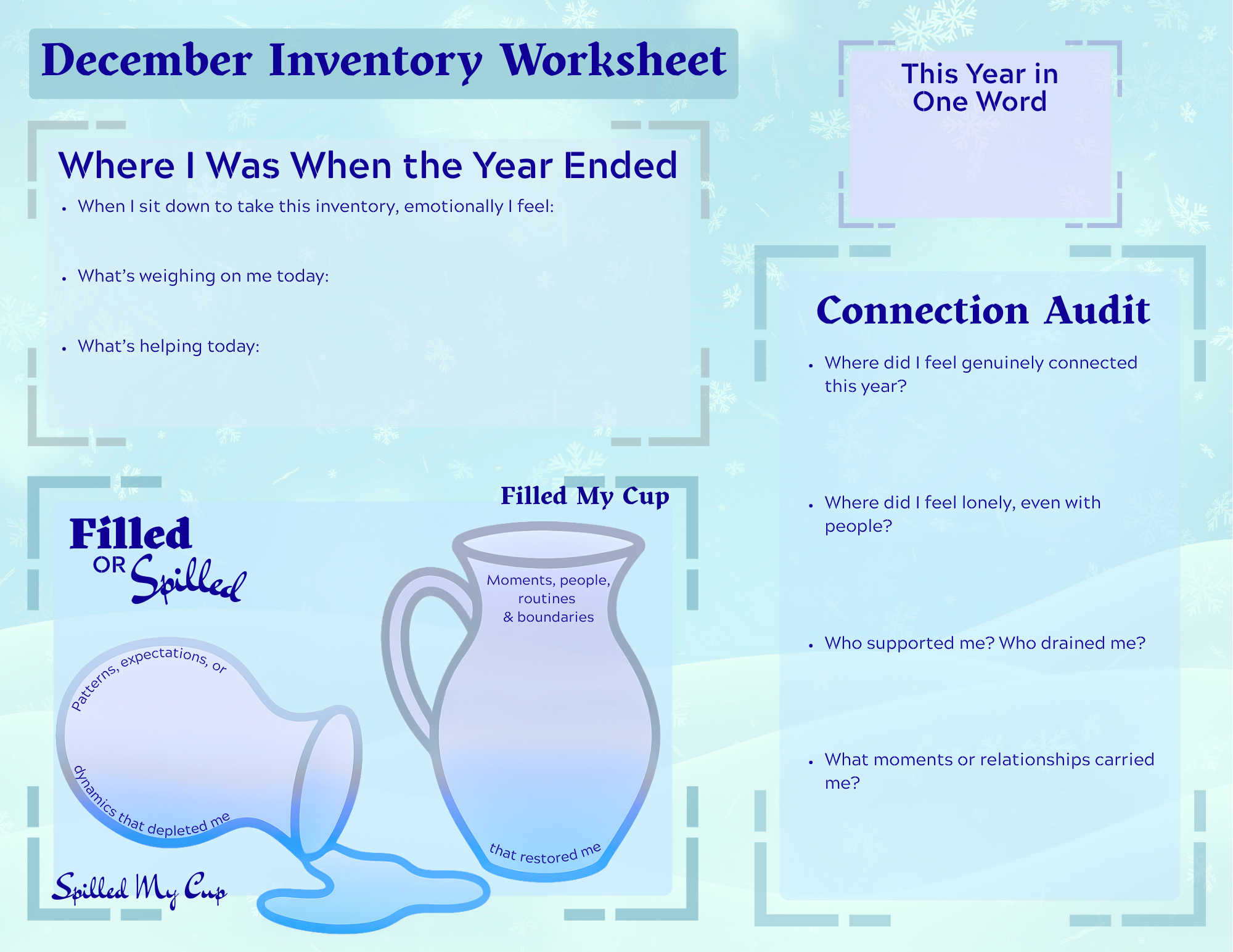
To make this easier to put into practice, we have also created a free December Inventory worksheet you can download and work through at your own pace. It is designed to be simple, flexible, and supportive, whether you want to reflect all at once or return to it throughout the month.
Let’s begin.
Step One: Assessing Your Emotional Capacity
Emotional availability is not a fixed trait. It is a matter of bandwidth.
When stress is high and you are stretched thin, it becomes harder to stay present and responsive. That does not mean you do not care. More often, it means you are overwhelmed.
Think of this as an inventory of your capacity, not your character.
Ask yourself:
Do I have the capacity to be present right now, or am I emotionally drained?
Am I pulling away because I am overwhelmed, or because I feel genuinely disconnected?
Where did I shut down this year, and what was happening at the time?
The goal here is understanding, not shame. You cannot build or repair connection without knowing what you can realistically offer.
Step Two: Renegotiating Expectations
Most of us are never taught this directly: Relationships are not built on love alone, they are built on agreements.
Some agreements are clear, like checking in every night. Others are unspoken, like assuming someone will understand when you are overwhelmed. These unspoken agreements often cause the most damage, quietly and over time.
December is a natural moment to pause and adjust. When your emotional capacity changes, your expectations need to change with it.
Ask yourself:
What expectations felt heavy or mismatched this year?
Where did I over-function or over-apologize?
Where did I under-communicate and hope others would read my mind?
Which agreements need to be reaffirmed, rewritten, or let go?
Expectations are not permanent. They evolve as you do. December offers the clarity to see what is no longer working and the space to revise it.
Step Three: Your December Reflection Ritual
This ritual draws from traditions of self-inquiry, including spiritual reflection, therapeutic practices, and grounding exercises. You do not need candles or an expensive journal. You only need a quiet moment and a willingness to be honest with yourself.
Consider these questions:
When was I emotionally open this year, and when was I depleted?
Which expectations no longer fit the person I am becoming?
Where did I feel connected, and where did I feel lonely even with people around me?
What patterns did I repeat without meaning to?
What boundaries protected me, and which ones weakened?
What surprised me about my reactions or desires this year?
What do I need more or less of from my relationships next year?
Who was I becoming in ordinary moments, and what helped or hindered that?
These questions are meant to reveal, not dismantle. They help explain not just what happened, but why. They also point toward what needs to shift if you want to avoid repeating the same emotional habits.
Alignment Over Reinvention
January often centers on reinvention. New goals. New identities. Big declarations.
Most lasting change, though, comes from smaller adjustments. Clearer expectations. More honest communication. A better understanding of your own capacity. The ability to say what you can give and what you cannot.
That is the purpose of the December Inventory.
It creates space for clarity and honesty. It helps you enter the new year without carrying emotional confusion or outdated expectations with you.